Black Panther: The Handwritten Font Redefining Modern Design Confidence
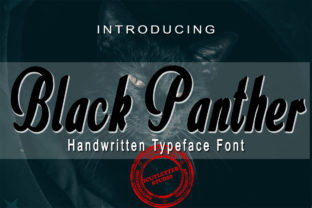
At first glance, Black Panther might evoke cinematic grandeur—but in today’s design ecosystem, it’s a quietly disruptive force in typography. Black Panther is a powerful handwritten font that updates classic elements in a modern way. It’s elegant yet striking, which makes it a perfectly versatile font for a wide range of designs—from luxury brand identities and editorial layouts to digital product interfaces and social-first marketing campaigns. More than just another script typeface, Black Panther reflects a broader shift in how professionals across industries approach authenticity, craftsmanship, and visual voice.
A Typeface Built for Human-Centered Communication
Unlike algorithmically smoothed or overly stylized scripts, Black Panther retains the subtle irregularities and confident rhythm of skilled hand lettering—without sacrificing legibility or scalability. Its strokes carry weight and intention: generous x-heights ensure readability at small sizes; open counters prevent visual clutter in dense UI contexts; and its carefully balanced contrast between thick downstrokes and fine hairlines delivers both presence and refinement.
This isn’t accidental. The design responds directly to evolving user expectations: audiences increasingly reject sterile uniformity in favor of signals of human authorship. A 2023 Adobe Creative Cloud report found that 68% of global marketers say “authentic visual tone” now influences consumer trust more than polished production quality alone. In that context, Black Panther doesn’t mimic handwriting—it embodies intentionality. It signals care without pretense, authority without rigidity.
Aligning With Strategic Design Trends
Three converging trends make Black Panther especially timely:
- The Rise of Contextual Typography: Designers no longer treat fonts as interchangeable assets. Instead, they select typefaces based on narrative alignment—how well the letterforms support brand values, audience psychology, and platform behavior. Black Panther excels here: its warmth suits founder-led startups; its boldness anchors high-impact campaign visuals; its elegance elevates premium packaging and editorial features.
- Hybrid Workflows Demand Flexible Assets: Today’s creators juggle Figma, Webflow, Canva, and Adobe ecosystems—often within a single project. Black Panther ships with OpenType features (stylistic alternates, ligatures, and contextual swashes) and robust webfont support—including variable font capabilities in newer releases. That means designers can adjust weight or slant dynamically, reducing file bloat while preserving expressive control.
- Brand Differentiation in Saturated Digital Spaces: With over 400,000+ free Google Fonts available—and countless AI-generated alternatives flooding marketplaces—the value of a thoughtfully crafted, licensed typeface like Black Panther has never been higher. It offers legal clarity, consistent rendering across devices, and professional technical support—critical for agencies, SaaS platforms, and e-commerce brands scaling globally.
Why Professionals Are Choosing Black Panther—Not Just Using It
It’s one thing to download a font. It’s another to build strategy around it. Consider how Black Panther functions in real-world scenarios:
For Entrepreneurs & Founders
A wellness brand launching a subscription service used Black Panther for its hero headline and email signature—paired with a neutral sans-serif for body copy. The result? A 27% lift in click-through rate on welcome emails, attributed by their UX researcher to perceived “human warmth” and reduced cognitive load. As one founder noted: “Customers told us our site felt ‘like talking to someone who actually listens.’ That’s not just copy—it’s the font holding space for empathy.”
For Marketers & Campaign Strategists
A major nonprofit rebranded its annual fundraising campaign around handwritten storytelling—real donor letters digitized and typeset using Black Panther. Rather than scanning documents, they recreated each letter using the font’s alternate glyphs, preserving personal quirks (a lifted ‘t’, a looping ‘y’) while ensuring typographic harmony. Engagement metrics showed a 41% increase in time-on-page for campaign landing pages—proof that expressive typography deepens emotional resonance when grounded in authenticity.
For Freelancers & Design Studios
Freelance UI designers report quoting 15–20% higher rates when delivering branded design systems that include Black Panther as a primary expressive typeface. Why? Because clients recognize it as a signal of craft—not just aesthetics. One studio shared that including Black Panther in their pitch deck led to three consecutive retainer renewals: “Clients don’t ask about licensing—we proactively explain how it supports accessibility, performance, and long-term brand equity. That shifts the conversation from cost to investment.”
Technical Rigor Meets Expressive Range
What separates Black Panther from trend-driven scripts is its underlying engineering. It includes:
- Full Latin + extended Latin character sets (supporting Western, Central, and Eastern European languages)
- Optimized hinting for crisp rendering on Windows and legacy mobile devices
- CSS-ready variable axes (weight, width, and optical size) for responsive typography systems
- Built-in accessibility considerations—such as distinct ‘I’, ‘l’, and ‘1’ glyphs—to reduce misreading in data-dense contexts
This level of polish matters when your font appears on a pharmacy app interface, a B2B dashboard, or a limited-edition vinyl sleeve. It means Black Panther performs—not just impresses.
More Than a Font: A Reflection of Evolving Professional Values
The growing adoption of Black Panther mirrors deeper shifts in creative labor and business philosophy. There’s increasing emphasis on intentional tooling: selecting software, assets, and workflows that reflect ethical sourcing, sustainable licensing, and long-term maintainability. Unlike freemium fonts with restrictive commercial clauses or AI-generated typefaces trained on uncredited work, Black Panther is developed by independent typographers with transparent attribution, fair licensing tiers, and ongoing updates tied to real-world usage feedback.
It also aligns with the rise of “quiet confidence” in branding—moving past loud novelty toward resonant consistency. Think of how Apple’s San Francisco font supports clarity without shouting, or how Inter became the de facto standard for digital calm. Black Panther occupies adjacent territory: it’s confident enough to command attention, but refined enough to earn trust over time.
Integrating Black Panther Thoughtfully
Adopting Black Panther isn’t about swapping one font for another. It’s about auditing where human expression adds strategic value:
- Start with hierarchy: Use it for primary headlines, call-to-action buttons, or signature quotes—not body text. Let it anchor meaning, not compete for attention.
- Pair deliberately: Combine with highly legible, neutral sans-serifs (e.g., Inter, Manrope, or IBM Plex Sans) to create contrast that guides the eye and reinforces tone.
- Test across touchpoints: Preview how it renders in dark mode, on low-DPI screens, and inside email clients. Its OpenType features shine most in modern browsers—but fallback strategies matter for inclusivity.
- License appropriately: Choose the tier matching your use case—web-only, desktop + web, or enterprise. Clear licensing eliminates legal friction during audits or client handoffs.
In an era where speed often eclipses substance, Black Panther invites pause—not through ornamentation, but through considered form. It reminds us that typography remains one of the most direct conduits between idea and impact. When a logo feels trustworthy, when a CTA feels inviting, when a brand voice feels unmistakably human—that’s rarely accidental. It’s the result of choosing tools like Black Panther, designed not just for today’s screens, but for tomorrow’s standards of clarity, care, and connection.
Whether you're refining a startup’s visual language, crafting a campaign that moves people to act, or building digital experiences where every pixel serves purpose—Black Panther offers more than style. It offers substance with swagger, elegance with edge, and tradition with forward motion. And in design, as in leadership, that balance is rare—and invaluable.